Digital low-light vision
BSI CMOS sensors capture low levels of ambient light. Digital processing and OLED displays present the image data in monocular and binocular systems.
D2L / SPECTRONIGHT
Digital night vision, thermal imaging and image fusion: the SPECTRONIGHT D2L family includes handheld devices, monoculars, binocular fusion systems and panoramic goggles for professional observation.
OVERVIEW
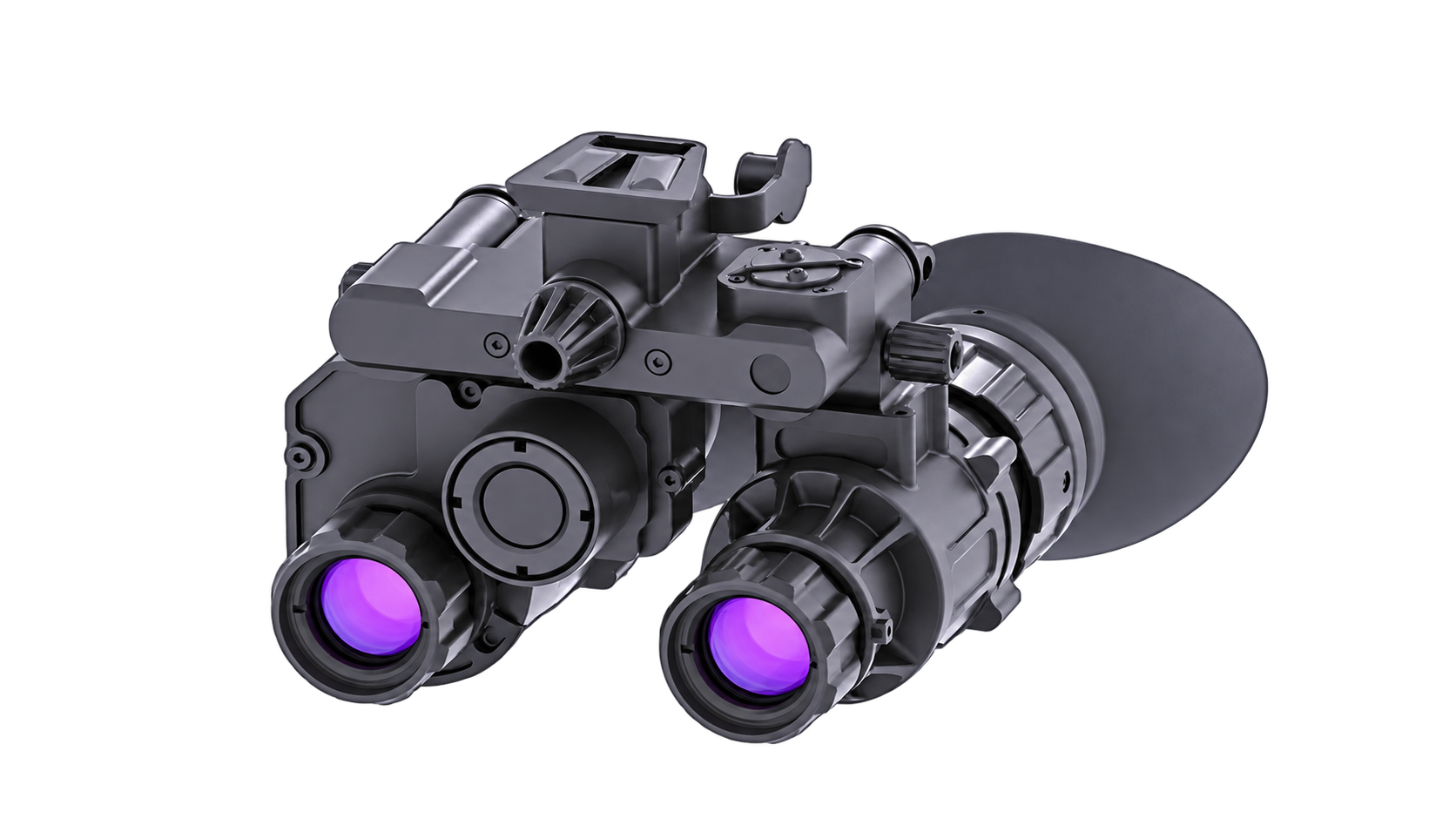
From portable observation to helmet integration, the D2L family covers different form factors and viewing requirements. The D2L-31F combines digital low-light and thermal imaging; the D2L-18 provides a 103° horizontal panoramic field of view.
We help define the configuration, interfaces and evaluation steps for your project.
Product details at the manufacturer ↗BSI CMOS sensors capture low levels of ambient light. Digital processing and OLED displays present the image data in monocular and binocular systems.
The D2L-31F and D2L-20F combine low-light and thermal information. Both models offer 640 × 512-pixel thermal imaging.
Handheld, monocular, fusion goggles or panoramic vision: we support system selection and compatibility with existing equipment.
TECHNICAL PROFILE
This binocular fusion system combines digital low-light imaging with thermal imaging. Two sensors, OLED displays and digital image fusion bring different lighting and contrast information together in one device.
Technical profile: D2L-31F. The model overview below covers further designs in the D2L family.
Open product documentation (PDF) ↗SPECTRONIGHT / D2L
Compare form factors and imaging channels. Each model links directly to its detailed product page.
Scroll horizontally to see all columns.
| Model | Design | Imaging | Key features |
|---|---|---|---|
| D2L-10H | Handheld | 1-inch sensor · 800 × 600 pixels | Photo/video recording, microSD and tripod mounting |
| D2L-14L | Compact monocular | 2/3-inch BSI CMOS · 800 × 600 pixels | 50° field of view · minimum illumination 0.0001 lx |
| D2L-14 | Monocular | 1-inch BSI CMOS · 800 × 600 pixels | 50° field of view · minimum illumination 0.00005 lx |
| D2L-31F | Binocular fusion system | Low-light 800 × 600 · thermal 640 × 512 pixels | Digital low-light and thermal fusion · Wilcox interface |
| D2L-18 | Panoramic night vision goggles | 1-inch sensor · 800 × 600 pixels | 103° horizontal panoramic field of view |
| D2L-20F | Fusion monocular | Low-light + 640 × 512-pixel thermal imaging | Pixel-level image fusion · helmet mounting · streaming |
DOWNLOADS / MEDIA
Documentation and media for your technical assessment.
Models, features and technical specifications of the digital night vision systems.
PRODUCT FILMS
Manufacturer footage and demonstrations. The model and recording conditions vary by video.
Outdoor footage of the night vision system and its image display.
For offline playback, extract the website ZIP and open this preview from that folder.
SPECTRONIGHT footage of landscapes, surroundings and the night sky.
For offline playback, extract the website ZIP and open this preview from that folder.
The manufacturer compares digital night vision with conventional image intensifier technology.
For offline playback, extract the website ZIP and open this preview from that folder.
TECHNICAL EVALUATION
A useful evaluation focuses on the exact variant and the intended context.
Match the form factor, imaging channels and field of view to the observation requirement.
Evaluate mounting, controls and power supply with existing equipment.
Assess image quality, recording and connectivity under defined conditions.
NEXT STEP